Why is my skylight leaking after heavy rain
Your skylight leaks after heavy rain because water is getting past failed flashing, dried-out seals, or a clogged curb weep channel. Here is how we find and fix it in Campbell.
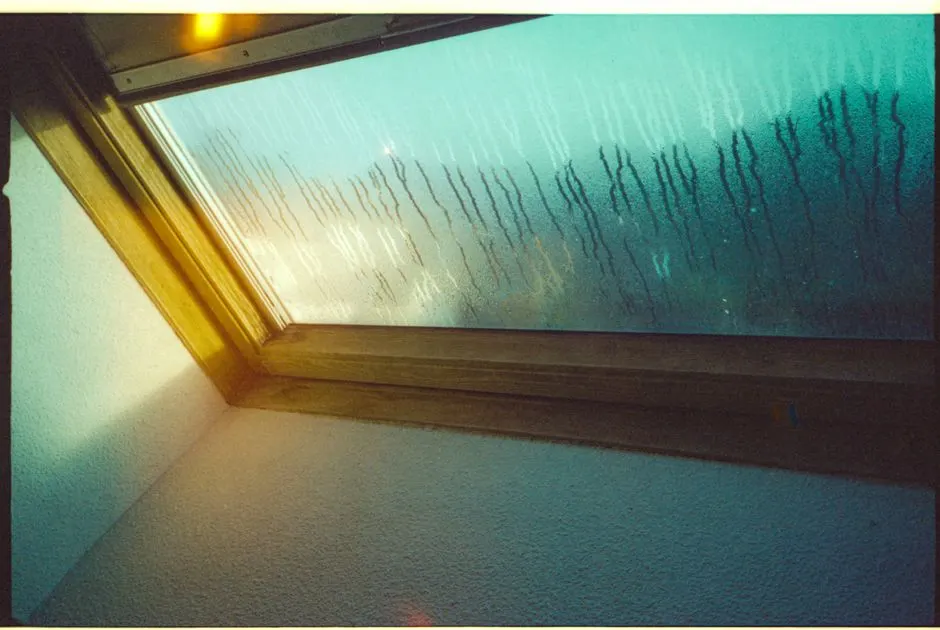
Your skylight is leaking after heavy rain because water is getting past one of three things: the metal flashing that ties the skylight to your roof, the sealant and gaskets around the glass, or the curb and weep channels that drain the frame. Rain alone does not create a leak - it exposes a failure that was already there. A skylight that stays dry in a drizzle and drips in a downpour is telling you the defect is small and pressure-dependent, which is usually good news for the repair bill.
Below we walk through the specific failure points we find on Campbell roofs, how to tell a skylight leak from a general roof leak, what to do in the first hour, and what a fix costs here in 2026.
The short answer: water is getting past the flashing, seals, or curb
A skylight leak after heavy rain is a water intrusion problem that shows up when rain volume and wind-driven angle overwhelm a worn seal, a lifted flashing edge, or a blocked drainage path. In dry weather the same defect sits quietly. Add two inches of rain in six hours and a 20 mph wind out of the southwest - normal for a Campbell winter storm - and water finds the gap.
Three conditions drive almost every skylight leak we diagnose:
- Volume. Heavy rain delivers more water than a small gap can shed. A pinhole that handles a drizzle gets overwhelmed.
- Wind angle. Rain driven sideways pushes water uphill against flashing that only sheds water running downhill.
- Thermal movement. Skylight frames expand and contract with temperature swings. Sealant that has hardened over three or four summers cracks instead of flexing.
If your skylight only leaks during storms and not during a garden-hose test, volume and wind angle are doing the work. That points to flashing or drainage, not a hole in the glass.
Why is my skylight leaking after heavy rain in Campbell?
Campbell sits in a rain-shadow valley that gets roughly 15 to 20 inches of rain a year, and almost all of it lands between November and March. That long dry stretch is the problem. Sealants, gaskets, and flashing caulk cure out and shrink through eight months of sun and heat, then get hit with the first atmospheric river of the season.
We also see a lot of 1960s through 1980s ranch homes with skylights added during remodels in the 1990s and 2000s. Those installs are now 20 to 30 years old. The glass is fine. The flashing and curb are not.
Two other local factors matter. First, mature valley oaks and redwoods drop leaves and debris onto roof planes, and that debris piles up against skylight curbs and blocks the weep channels that drain the frame. Second, Campbell roofs take direct afternoon sun, so the south- and west-facing side of a skylight curb bakes harder than the north side. That uneven exposure is why one corner of the flashing fails before the others. Homeowners across Roof Leak Repair in Downtown Campbell deal with this on older downtown bungalows where skylights sit close to parapet walls and debris traps.
The six things that actually fail on a skylight
When we open up a leaking skylight, the cause is almost always one of these six. Knowing which one you have tells you whether it is a $300 fix or a $2,000 fix.
1. Flashing failure
The flashing is the metal that laps over the roof surface and up the sides of the skylight curb. It is the number one leak source we find. The most common failure is the head flashing - the piece at the uphill side of the skylight. If it was installed without a proper cricket or saddle behind it, water pools against it instead of diverting around. Caulk at the flashing seams also fails first, usually within 8 to 12 years.
2. Curb failure
The curb is the raised box the skylight sits on. On older installs, the curb is framed wood wrapped in roofing material. If the wrap was done with a single layer of underlayment and no metal cap, water wicks into the wood and the curb rots from the inside. You will not see it from the roof. You see it as a brown stain on the drywall below.
3. Seal and gasket failure
Factory gaskets between the glass and the frame dry out and shrink. On a fixed skylight this shows as water beading along the inside edge of the glass. On a venting skylight, the hinge seal and the operator seal are the usual culprits. Gaskets have a service life of about 10 to 15 years in this climate.
4. Condensation, not a leak
Not every drip is a leak. A single-pane or failed double-pane skylight will condense interior humidity on cold mornings. The tell: condensation appears on cold, clear mornings with no rain, and it stops when the interior humidity drops. A real leak tracks to rain events.
5. Blocked weep channels
Most skylight frames have small weep holes or channels that drain water that gets behind the glass gasket. When leaves, pine needles, or roof grit block them, water backs up and finds the interior. This is the cheapest fix on the list - often a cleaning, not a repair.
6. Cracked glass or failed seal between panes
Hail, a dropped branch, or a thermal crack in the glass will let water straight through. On a sealed double-pane unit, a failed perimeter seal lets moisture between the panes and eventually into the frame. If you can see fogging between the panes, the unit is done.
How to tell a skylight leak from a roof leak
A skylight leak stains the ceiling in a tight, roughly rectangular pattern directly under the skylight, and it starts within minutes of heavy rain. A roof leak usually shows up somewhere else - a wall, a ceiling far from the roof penetration, or a spot that grows over days rather than minutes.
Here is the quick test we run:
- Timing. Drip starts within 10 to 20 minutes of rain beginning? Skylight or flashing. Drip appears hours later or the day after? Likely a roof plane or valley leak traveling along a rafter.
- Location. Stain directly below the skylight? Skylight. Stain offset by more than two feet? Water is traveling.
- Weather dependence. Leaks only with wind-driven rain from one direction? Flashing on that side. Leaks with any rain? Seal or glass.
If you cannot pin it down, professional roof leak detection Campbell CA uses a controlled water test on the roof to isolate the entry point in under an hour. That beats guessing and re-caulking the wrong seam.
What to do in the first hour of a leak
Stop the water from reaching your ceiling and floor first, then worry about the roof. Water damage to drywall, insulation, and flooring costs far more than the skylight repair itself.
- Move furniture and electronics out from under the drip and lay down towels or a bucket.
- Poke a small drain hole in a bulging ceiling with a screwdriver if water is pooling behind the paint. A controlled drip beats a ceiling collapse.
- Do not climb on a wet roof. Asphalt shingles and tile are slick when wet, and the risk is not worth it.
- Photograph everything - the drip, the stain, the ceiling - for your insurance file.
- Call for same-day help if the drip is steady or the ceiling is sagging. Our emergency roof leak repair Campbell CA team tarp and stabilize the leak the same day, then schedule the permanent fix.
Once the rain stops, get the skylight looked at within a week. A small flashing repair done in dry weather costs a fraction of what rotted curb framing and interior drywall repair cost together.
What skylight leak repair costs in Campbell in 2026
Typical 2026 pricing in this area runs from about $250 for a weep-channel cleaning and re-caulk to $2,500 or more for a full skylight replacement with new flashing and curb repair. Most of the jobs we run land in the middle.
- Leak detection and inspection: $150 to $350, often credited toward the repair.
- Re-caulk and seal refresh: $250 to $500.
- Flashing repair or replacement: $450 to $1,200 depending on access and roof type.
- Curb repair with new metal cap: $700 to $1,800.
- Full skylight replacement: $1,400 to $3,500, including the unit, flashing kit, and labor.
Two things move the price most: roof pitch and roof material. A walkable asphalt shingle roof with a low-slope skylight is a straightforward job. A steep tile roof where we have to lift and reset field tiles takes longer, and the tile itself can crack during removal. If your home has a low-slope or flat section around the skylight, flat roof leak repair Campbell CA pricing applies because the flashing detail is different.
We give you the price before we start, and we do not add line items mid-job.
Common mistakes we see homeowners make
The single most expensive mistake is caulking over the leak from the inside. Interior caulk traps water in the curb and framing, and by the time it shows again the wood is soft. We have pulled curbs that looked fine from the roof and crumbled in our hands.
Other repeat offenders:
- Using the wrong sealant. Silicone does not bond well to dirty metal flashing and fails within a season. Roofing-grade polyurethane or butyl is the correct product.
- Sealing the weep holes. Homeowners caulk every gap they can see, including the drainage channels. That traps water instead of shedding it.
- Ignoring the flashing cricket. On a skylight above a roof slope, a missing cricket sends water straight into the head flashing. Caulk will not fix a drainage design problem.
- Pressure washing the roof. High-pressure water drives past seals and strips granules. It turns a small leak into a big one.
- Waiting for the next storm. A leak that appeared once will appear again, usually worse. The repair does not get cheaper with time.
If you are not sure whether the problem is the skylight or the roof plane around it, a roof leak inspection Campbell CA will separate the two before you spend money on the wrong fix.
When to call a professional
Call us when the leak returns after a rain event, when you can see water staining drywall or framing, or when the skylight is more than 15 years old and has never been serviced. Those three situations almost always mean the flashing or curb has failed, and that is not a caulk-gun job.
Campbell Roof Protectors handles skylight leaks across Campbell and the surrounding West Valley. We find the entry point with a water test, repair the flashing, curb, or seal that failed, and re-test before we leave. If the skylight itself is past saving, we tell you that straight and give you the replacement number up front. For homes in the older neighborhoods near the creek, we also handle Roof Leak Repair in Los Gatos Creek, where mature tree cover and shaded roof planes keep skylight curbs wet longer after a storm.
Frequently Asked Questions
Why is my skylight leaking after heavy rain in Campbell?
Water is getting past failed flashing, a dried-out gasket, or a blocked weep channel. Campbell's long dry season hardens sealant for eight months, then the first big storm of the season pushes water through gaps that opened over the summer. Wind-driven rain makes it worse.
How do I fix a skylight leak after heavy rain in Campbell CA?
Stop interior water damage first, then get the roof looked at within a week. Most fixes are flashing repair, re-caulking with polyurethane sealant, or clearing weep channels - typically $250 to $1,200. Curb rot or a failed glass unit needs a bigger repair.
Can heavy rain cause a skylight leak in Campbell?
Heavy rain does not create the leak, it reveals one. Two inches of rain in six hours with 20 mph wind overwhelms a small flashing gap or worn seal that stays dry in light rain. If it only leaks in storms, the defect is small.
Is a leaking skylight an emergency?
It is if water is pooling in the ceiling, the drywall is sagging, or the drip is steady. Call for same-day help. A slow drip into a bucket can wait for the next dry day, but do not leave it more than a week.
How long does skylight leak repair take?
Re-caulking and weep-channel cleaning take one to two hours. Flashing repair runs three to five hours. A full skylight replacement is a one-day job, plus a return visit if the curb framing needs to dry out before the new unit goes in.
Get help with Roof Leak Repair in Campbell
If your skylight is dripping every time it rains, we can find the entry point and fix it before the next storm. Campbell Roof Protectors serves Campbell and the West Valley with same-day leak response and upfront pricing.
Call us at 1234567890 to schedule your skylight leak inspection.